As a child, certain aspects of my grandmother baffled me. When my family arrived for a stay at her house, we needed to move piles of dresses and other outfits off the beds before we slept in them. No space remained in any of the bedroom closets for her clothes. So, she kept them neatly piled—already on hangers—laying on spare beds.
Once I needed a new tube of toothpaste. I told my mom, who then informed her mother. So, my grandmother took me to a set of built-in drawers in the hall near the bath and opened one. It was shallow, but deep and wide. And completely full of unopened boxes of toothpaste.
Learning later about her early life helped me understand her better. She had come of age during the depression, marrying a young G.I. during the war. After his discharge, she shopped for a household that included two small children while my grandfather attended college on the G.I. bill. The scarcity she had experienced during adolescence and early adulthood led to lifelong habits of frugality. She always looked for a good deal and made sure to use her coupons before they expired. Even if she already had a lifetime supply of toothpaste.
In the first part of this post, I described textual evidence that Luke’s source material for his first two chapters of his gospel came from Jesus’ mother Mary. They deal with topics important to a first-century woman and exhibit a feminine bias. Only Mary had direct—or nearly direct—knowledge of all the events described, including her internal state. It all seemed historically accurate—except for one thing.
A biblical incongruity
After the angel informed Mary of her impeding pregnancy, she goes to visit her relative Elizabeth. Elizabeth greets her, calling the “mother of my Lord.” Mary responds, saying:
“My soul glorifies the Lord
and my spirit rejoices in God my Savior,
for he has been mindful
of the humble state of his servant.
From now on all generations will call me blessed,
for the Mighty One has done great things for me—
holy is his name.
His mercy extends to those who fear him,
from generation to generation.
He has performed mighty deeds with his arm;
he has scattered those who are proud in their inmost thoughts.
He has brought down rulers from their thrones
but has lifted up the humble.
He has filled the hungry with good things
but has sent the rich away empty.
He has helped his servant Israel,
remembering to be merciful
to Abraham and his descendants forever,
just as he promised our ancestors.” (Luke 1:46-55)
This passage, often referred to as Mary’s Song or the Magnificat, has been set to music and used as a prayer over the centuries. It is a confident song of praise that celebrates the great inversion of the gospel message, exalting the humble but bringing down the proud. And I long found it completely incongruous with the young woman who actually showed up on Elizabeth’s doorstep.
A scared young girl
Luke uses the Greek word “diatarassó” to describe Mary’s reaction to the angel. Only used here the Bible, it signifies a state of being ‘deeply disturbed’ or ‘highly agitated.’ The presence of angels is terrifying; their first words are typically “don’t be afraid.” But his message likely terrified her as well.
Mary lived in a traditional society that raised girls to become wives and mothers. Typically becoming engaged and marrying as teens. It maintained strict sexual mores; the Mosaic law made adultery a capital offense. And girls didn’t get to learn to read the Hebrew scriptures like boys might.
Thus, Mary was a teenager living in a small town on track to accomplish the first of her life goals. She had only second-hand theological knowledge and knew quite well the dire consequences of sex outside of marriage. Becoming pregnant while engaged but not yet married was scandalous—for her and her family. She faced a grave danger of this ruining if not ending her life. The continued scandal nine months later likely prompted her to travel with Joseph while still unwed and about to give birth. To have her baby alone, far from family.
Addressing the discrepancy
Thus, the person who actually showed up on Elizabeth’s doorstep would have been a scared, confused girl who had no grasp of how that which was happening to her fit into God’s grand plan. A girl who requested but did not receive an explanation from the angel. Not the joyful, confident, theologically sophisticated woman who sang the Magnificat. What gives?
In the prologue to his gospel, Luke makes clear that his account comes from information he obtained during his investigation, not anything he personally witnessed. So, let’s think about the likely history of how Mary’s account got to him.
Mary’s subsequent history
After Jesus’ birth, Mary would have stayed busy caring for her husband and children. She probably avoided talking about the whole thing to not stir up the scandal again. And then at some point along the way Joseph seems to have died.
Then her firstborn started traipsing around the countryside, preaching and doing miracles, attracting both followers and detractors. At one point she and some of Jesus’ brothers decided he had lost his marbles and tried unsuccessfully to bring him back home (Mark 3:21, 31-35). Jesus wasn’t the only would-be messiah during that period who ran around Judea proclaiming a radical message, eventually getting himself killed by the authorities.
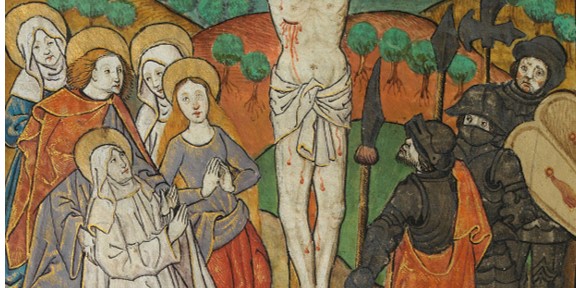
But once a mother, always a mother. When the religious leaders finally had enough of her son and orchestrated his execution, she stood nearby, watching helplessly. No parent ever wants to watch their child die. Even less in a grand miscarriage of justice. In one of the most humiliating, excruciating forms of execution ever invented. By the very group of people Mary had grown up revering as holy men. When she had brought her baby to the temple, she received a prophecy declaring that a sword would also pierce her soul (Luke 2:35). It came true that dark day at the foot of the cross.
Mary to Luke
After Jesus’ ascension to heaven, Mary and her other sons joined a small group of believers who gathered to wait and pray in Jerusalem (Acts 1:14). While not mentioned again, Mary most likely remained there. Jesus had commissioned his disciple John to care for her. Her son James eventually emerged as a church leader. And the church set up a whole system to care for widows.
Only after the message of her son’s death and resurrection began spreading, changing lives and society, would people have started taking any interest in Mary’s story. But then again, she was just a woman in a very chauvinistic society. Still, the message about her son spread far beyond Judea, eventually reaching a Greek physician named Luke.
We have no details, but this message clearly transformed Luke’s life. He joined Paul’s traveling entourage, becoming a first-person eyewitness to the events he recorded in the second half of the book of Acts. Then, in 57 A.D., these travels brought them to Jerusalem.
Having become a very controversial figure, Paul’s mere presence in the temple provoked a riot, resulting in his arrest. He then languished in prison for two years, enduring multiple inconclusive trials. Trials of which Luke provides detailed reports, including verbatim records of speeches.
Collecting sources
The detailed notes Luke obviously made during the trials suggest that he had begun collecting material for a future writing project. And he had plenty of time on his hands to do such. It took two years for Paul’s case to be resolved before they left for Rome. I’m sure a man like Luke took advantage of this time to gather additional information about the life of Jesus Christ and the early church. Including from the woman who had given birth.
Maybe Luke got hold of a document where someone had recorded Mary’s story. Possibly he interviewed Mary herself. Mary, who would have been around fifty at Jesus’ execution, had a decent shot at living into her eighties. After all, she now had a reliable support network and had survived the high mortality rates of infancy, childhood, and giving birth. She might have lived long enough to meet Luke. Either way, Greek scholars have noticed an unusual aspect in the style and grammar of Luke 1-2. Hints that this account first existed in Aramaic—Mary’s native language—and only later was translated into Greek.
Thus, the account that Luke used for his gospel on did not come from a scared, confused teenage girl with no clue how her baby fit into the bigger theological picture. By now Mary was a mature woman who looked back at those events through the lens of Jesus’ death and resurrection. She had spent decades pondering the meaning of them in her heart. At times her life had been hard, scary, and painful. But in the end, she rejoiced. This is the woman who gave us the Magnificat, which Luke incorporated into his history.
The implications
Tracing the probable history of how Mary’s Song wound up in Luke’s gospel resolves my previous questions. It also reinforces my belief that Luke wrote reliable histories about these events. But not everyone agrees.
There exists a long history of people—including scholars—attempting to dismiss the gospels as legends or works of fiction. Mary’s story and her song point to reasons someone might want the gospels to not be true.
The message about Jesus Christ that the angel brought Mary and that Paul brought to Luke changed their lives completely. They both gave up their own plans and expectations in life to join Elizabeth in calling Mary’s son, “my Lord.” The gospel will change lives.
Mary sang that God “has lifted up the humble” but also that “he has scattered those who are proud.” The proud religious leaders who orchestrated Jesus’ execution justified it as a move to protect the nation and the temple from destruction by the Romans (John 11:46-53). A scattering and destruction that nevertheless occurred four decades later. Human pride and an unwillingness to admit we might be wrong can be a powerful barrier to truth.
The gospel message, if true, communicates more than mere information. It makes a potentially transforming call on each of our lives. A call that requires us to give up pride and our own plans. A call that every one of us should consider carefully. The gospel message brought rejection, hardship and sorrow into Mary’s life. But in the end, she rejoiced.
Further reading
Craig Blomberg, The Historical Reliability of the Gospels, (2007: InterVarsity Press)
Leave a Reply