Category: How science works
-

The reality of the ‘Scientifically impossible’
At first glance, she seemed like an ordinary person. She was an old, tiny woman, her brown face wrinkled, her black hair turned gray. She could have been bitter after a lifetime of hardship. She never knew her father and had to leave school early to help her mother make ends meet. Through hard work…
-

Forged in Fire, part 2
Certain things about Spanish initially seemed weird to me. It expresses some ideas differently. In English we say, “He is twenty-five years old.” Spanish, on the other hand, expresses that as “Él tiene veintecinco años.” That translates literally as: “He has twenty-five years.” English treats age as a personal characteristic, something you are. Spanish, in…
-

Forged in fire, part 1
Occasionally students ask questions that catch me off guard. Years ago, we had just wrapped up a discussion of science history in my conceptual physics class. One student raised his hand in response to my asking if there were any questions. He wanted to know why science had started in Europe as opposed to somewhere…
-
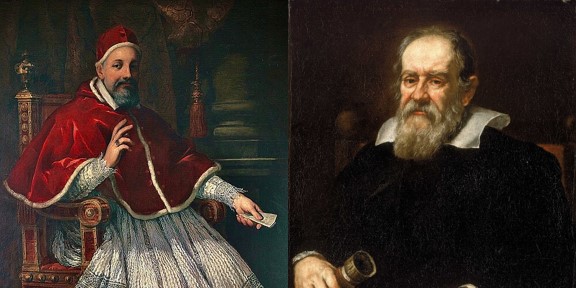
How to engineer a pyrrhic victory
We fought a lot early on in our marriage. Well, kind of fought. She would lash due to feeling overwhelmed and unloved. I responded with avoidance and retreating further into my shell. Needless to say, neither approach solved the conflict. We played the blame game, determined not to lose. In the end, we both did. As humans, we naturally blame others and absolve ourselves when we find ourselves in conflict. Our brains are wired that way. Our cognitive biases lead us to prefer overly simplistic…
-

It’s good to be wrong
I looked at the phosphor screen dumbfounded. Several months previously I had confidently predicted I would never see this. Yet, there it was in front of me. I rotated the sample 60 degrees, and the pattern reversed, just as expected. I had a good, logical reason why this shouldn’t have happened. But I could see…